
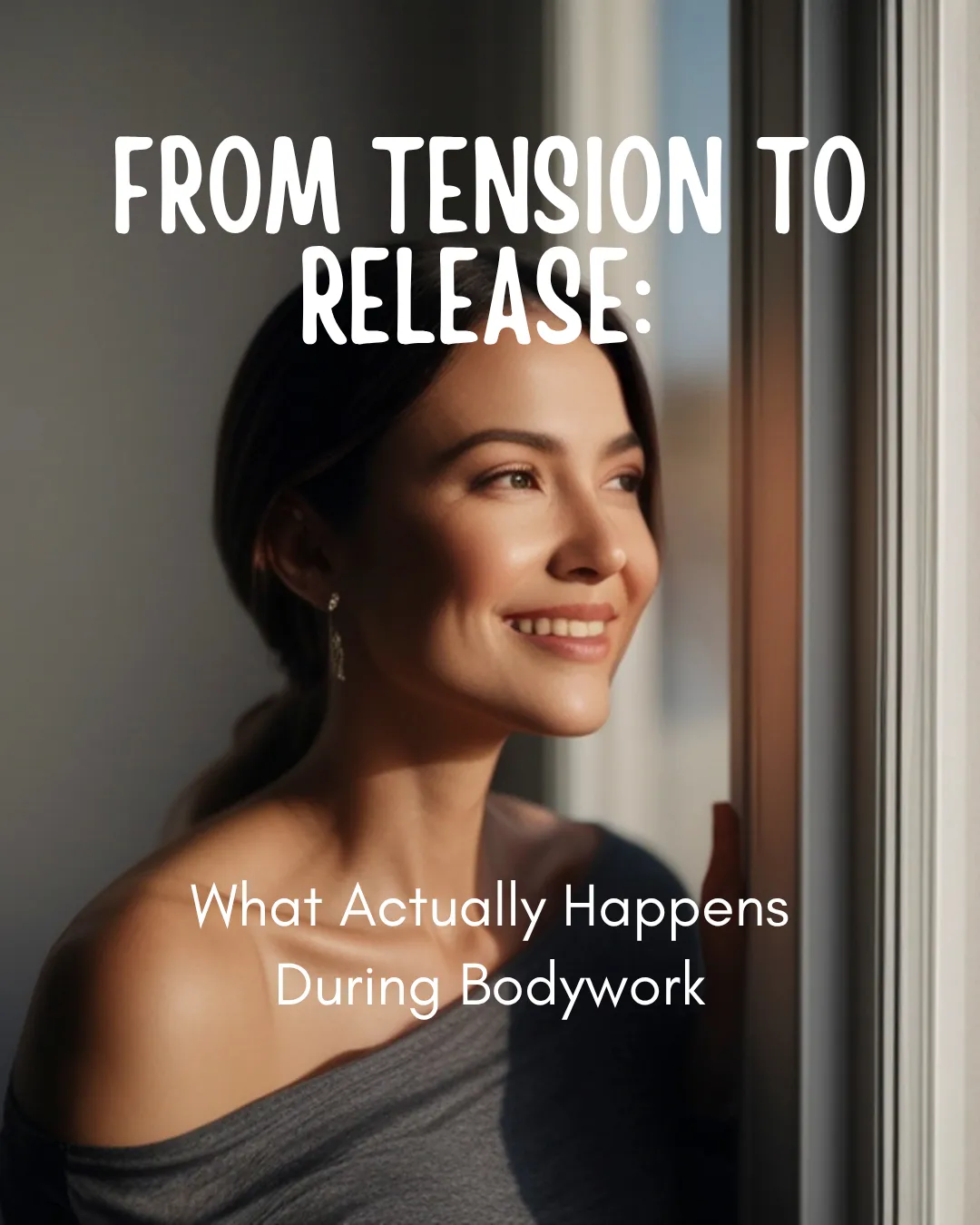
From Tension to Release: What Actually Happens During Bodywork
Most people walk into a massage session expecting one thing:
Relief.
Relief from pain.
Relief from tension.
Relief from the constant feeling that their body is working harder than it should.
But what most people don’t realize is this:
Relief isn’t just something that happens to the muscles.
It’s something that happens to the entire system.
Because tension isn’t just physical.
It’s neurological.
It’s habitual.
It’s protective.
And until your body feels safe enough to let go…
it won’t.
Tension Is Not the Enemy
There’s a common misconception that tight muscles are the problem.
They’re not.
They’re the response.
Your body creates tension for a reason:
To stabilize weak areas
To protect injured tissues
To compensate for imbalance
To hold you together under stress
So when you feel tightness in your shoulders or back, your body isn’t failing you.
It’s doing its job.
The issue is…
It never got the signal that it’s safe to stop.
The Nervous System: The Real Gatekeeper
Before any muscle releases, something else has to happen first:
Your nervous system has to shift.
Most people live in a constant low-grade state of stress:
Always thinking
Always moving
Always responding
This keeps the body in a sympathetic state—what we often call “fight or flight.”
In that state:
Muscles stay slightly contracted
Breathing stays shallow
Recovery is limited
Pain sensitivity increases
So even if you stretch…
even if you rest…
Your body doesn’t fully let go.
Because it doesn’t feel safe enough to.
What Happens When You Get on the Table
At ANVIL Bodyworks, the session doesn’t start with technique.
It starts with awareness.
There’s a moment—often quiet, often subtle—where your body begins to register:
“I can stop holding.”
This is where everything changes.
Breathing slows.
The nervous system downshifts.
Muscles begin to soften—not because they’re being forced, but because they’re allowed.
This is the difference between temporary relief…
and meaningful change.
The First Layer: Surface Tension
At the beginning of most sessions, the body presents with what we can call surface-level tension.
This includes:
Tight upper traps
Stiff lower back
Restricted shoulders
General muscular fatigue
This layer is often what clients notice first.
And it responds relatively quickly.
But this is just the beginning.
The Deeper Layers: Patterns, Not Just Muscles
As the session progresses, something more important starts to emerge:
Patterns.
Not just where the body is tight…
but why it’s tight.
For example:
A tight shoulder might be compensating for limited thoracic mobility
Lower back tension might be supporting restricted hips
Neck pain might be tied to posture, breathing, or stress patterns
This is where bodywork becomes less about “fixing” and more about understanding.
Because if you only treat the symptom…
the body will recreate the problem.
Fascia: The Hidden System
One of the most overlooked parts of the body is fascia.
Fascia is a connective tissue that surrounds and integrates everything:
Muscles
Organs
Joints
When fascia becomes restricted:
Movement becomes limited
Tension spreads across regions
Pain becomes harder to localize
This is why a tight hip can affect your back.
Why shoulder tension can lead to headaches.
At ANVIL, releasing fascia isn’t about aggressive force.
It’s about:
Slow, intentional pressure
Following the tissue response
Allowing the body to unwind
Because fascia doesn’t respond to force.
It responds to presence and time.
The Moment of Release
There’s a moment in every effective session.
You can feel it.
The tissue changes.
The resistance softens.
The body exhales—sometimes literally.
This is what real release looks like:
Muscles lengthen without force
Joints move more freely
Pain decreases
Breathing deepens
And often…
Clients don’t just feel physical relief.
They feel emotional release too.
Why Emotional Release Happens
Your body doesn’t separate physical stress from emotional stress.
It stores both.
So when tension is released:
Some clients feel lighter
Some feel calm
Some feel unexpectedly emotional
This isn’t something to fix.
It’s something to allow.
Because your body is processing…
not just relaxing.
Why One Session Helps — But Consistency Changes Everything
One session can:
Reduce pain
Improve mobility
Calm the nervous system
But consistent bodywork does something deeper.
It retrains your system.
Over time:
Your baseline tension decreases
Your body recovers faster
Pain patterns stop returning as quickly
You become more aware of what your body needs
It’s no longer reactive.
It becomes preventative.
This Is Why Every Session at ANVIL Is Different
There’s no routine.
No standard sequence.
Because no two bodies show up the same way.
Some sessions require:
Deep, focused work
Slow, nervous system regulation
Mobility-based approaches
Integration of multiple modalities
Your body leads the session.
Not a script.
The Outcome Isn’t Just Relief
Relief is the entry point.
But the real outcome is:
Better movement
Less restriction
Increased awareness
A regulated nervous system
A body that doesn’t feel like it’s constantly bracing
The Question to Ask Yourself
Not:
“Did that feel good?”
But:
“Does my body feel different?”
Because when the work is done right…
It always does.
The Invitation
If your body has been holding tension for too long…
If you’ve been stretching, resting, and pushing through without lasting change…
It’s not because your body is broken.
It’s because it hasn’t had the right input.
It’s time to get on the table.