
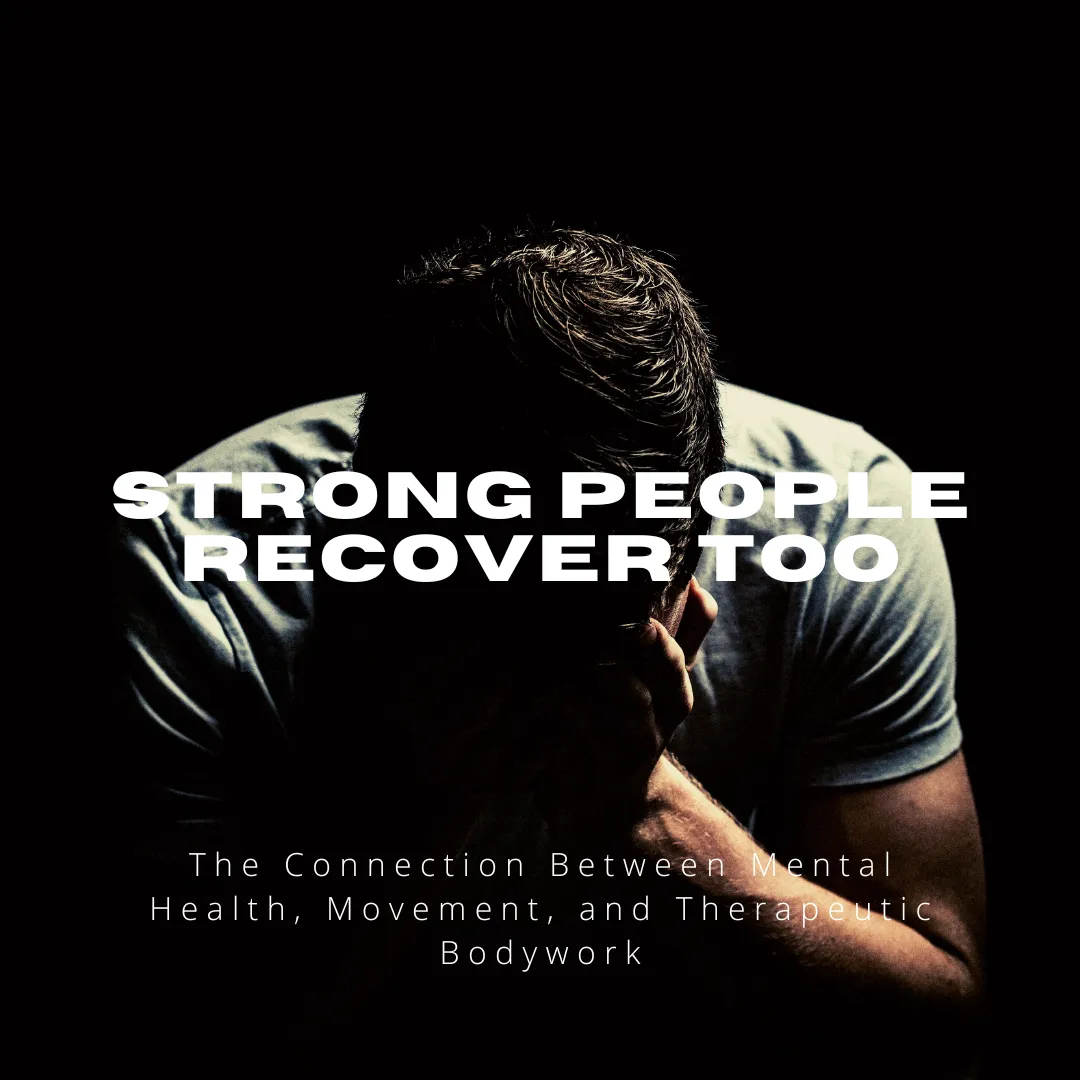
Strong People Recover Too: The Connection Between Mental Health, Movement, and Therapeutic Bodywork
When someone says they're "doing fine," what do they really mean?
For many people, it means they're getting through the day.
They're making it to work.
Packing lunches.
Paying bills.
Showing up for meetings.
Taking care of aging parents.
Helping their children with homework.
Checking every box on the to-do list.
From the outside, everything appears normal.
But beneath the surface, many people are carrying more than anyone realizes.
Stress.
Grief.
Loneliness.
Uncertainty.
Fatigue.
Burnout.
Anxiety.
Life has a way of quietly piling responsibilities onto our shoulders until one day we realize we haven't truly taken a deep breath in weeks.
As a massage therapist, I don't pretend to know what every client is carrying emotionally.
But I do know this:
The body often tells the story long before words ever do.
September Is a Reminder That We All Need Support
September is recognized as both National Suicide Prevention Month and National Recovery Month.
These observances remind us of something incredibly important:
Every person is fighting battles we may never see.
Some people are recovering from surgery.
Others are recovering from injuries.
Some are rebuilding after addiction.
Others are navigating depression, anxiety, grief, divorce, caregiving, financial stress, or simply an exhausting season of life.
Recovery isn't one-size-fits-all.
Neither is healing.
One of the greatest lessons I've learned through bodywork is that every person who walks through my door has a unique story.
Some stories are told with words.
Others are told through posture.
Movement.
Breathing.
Muscle tension.
The way someone carefully sits down because their back hurts.
The way another client unconsciously rubs their neck while we talk.
The way someone says, "I don't even know where to start."
Healing begins by meeting people where they are.
The Body and Mind Were Never Meant to Be Separate
For many years, healthcare treated the mind and body as if they existed independently.
Today, we understand that they constantly influence one another.
Think about what happens when you're nervous.
Your heart races.
Your breathing becomes shallow.
Your stomach feels unsettled.
Your shoulders tighten.
Your jaw clenches.
Now think about the opposite.
Remember a time you laughed so hard your whole body relaxed.
Or the feeling of taking a deep breath while standing on a mountain trail.
Or sitting quietly beside someone you trust.
Your body changes.
So does your mind.
Neither exists in isolation.
This is why caring for your physical health can positively influence your emotional well-being—and why emotional stress often affects the body.
Stress Has a Physical Address
One of the most common misconceptions about stress is that it's "all in your head."
In reality, stress lives throughout the body.
It changes the way we breathe.
It changes posture.
It affects sleep.
It influences digestion.
It increases muscle guarding.
It alters how we move throughout the day.
Many clients are surprised to discover that their persistent shoulder pain began during an especially stressful season.
Others notice headaches become more frequent when life feels overwhelming.
Some experience tight hips after months of sitting longer, exercising less, and carrying emotional tension.
The body adapts to stress remarkably well.
The problem is that many of us stay in that stressed state for weeks or months without giving our nervous system an opportunity to reset.
Your Nervous System Needs Safety
One of my favorite things to explain to clients is that muscles don't simply "relax."
Your nervous system allows them to.
Think about that for a moment.
If your brain believes you're constantly under pressure—whether from deadlines, family responsibilities, emotional challenges, or chronic pain—it often keeps muscles slightly guarded as a protective response.
This isn't a flaw.
It's how we're designed.
But when that protective response never gets turned off, the body can begin feeling stiff, tired, sore, and restricted.
Supporting your nervous system through healthy sleep, movement, breathing, meaningful relationships, and therapeutic bodywork can help create an environment where your body feels safer.
And when the body feels safe...
Healing becomes easier.
The Healing Power of Human Connection
One thing I've always believed is that people need to feel heard.
Not rushed.
Not judged.
Not treated like another appointment on a schedule.
Heard.
Every session at ANVIL Bodyworks begins with a conversation because understanding your experience matters just as much as understanding your muscles.
Sometimes clients tell me exactly where they're hurting.
Sometimes they aren't sure.
Sometimes they simply say,
"Everything feels tight."
That conversation helps guide everything that follows.
Healing isn't only about technique.
It's about trust.
Feeling safe.
Knowing someone is listening.
While massage therapy is not psychotherapy and should never replace counseling or mental health treatment, compassionate human connection remains an important part of overall wellness.
Every person deserves to feel seen.
Movement Is Medicine
Our bodies were designed to move.
Unfortunately, modern life often asks us to sit.
We sit while driving.
Working.
Watching television.
Scrolling on our phones.
Helping children with homework.
Even relaxing often involves sitting.
Movement doesn't have to mean intense workouts.
It can mean:
Taking a walk after dinner.
Stretching for five minutes before bed.
Standing every hour at work.
Playing outside with your children.
Gardening.
Dancing in the kitchen.
Movement reminds the body that it's capable.
Strong.
Adaptable.
Every little bit counts.
Therapeutic Bodywork as Part of a Wellness Plan
One of the reasons I love therapeutic massage is that it supports so many aspects of health.
Clients often report feeling:
More relaxed
Less physically tense
More aware of their posture
Better able to move comfortably
More rested after quality sleep
More connected to their bodies
Massage therapy is not a cure for anxiety, depression, or other mental health conditions, nor should it replace medical or psychological care.
However, it can be a meaningful part of an overall wellness strategy alongside:
Regular exercise
Counseling or therapy
Medical care
Healthy nutrition
Quality sleep
Strong relationships
Mindfulness practices
Time outdoors
True wellness is rarely built on one habit alone.
It's built through many small choices working together.
Five Ways to Support Your Mental and Physical Health This Fall
1. Check In With Yourself
Instead of asking, "What do I have to do today?"
Ask,
"How am I really doing?"
2. Prioritize Sleep
Your brain and body both recover while you sleep.
Protecting your rest is one of the greatest investments you can make.
3. Move Daily
Movement reduces stiffness, improves circulation, and supports emotional well-being.
It doesn't have to be complicated.
4. Reach Out
If you're struggling, don't carry it alone.
Talk with someone you trust.
If you need additional support, reach out to a licensed mental health professional or your healthcare provider.
Asking for help is a sign of courage—not weakness.
5. Schedule Recovery
Whether it's taking a walk, spending time in nature, practicing deep breathing, or receiving therapeutic bodywork, recovery deserves a place on your calendar—not just your wish list.
Strength Isn't About Carrying Everything Alone
One of the greatest myths our culture teaches is that strong people don't need help.
The opposite is often true.
Strong people understand their limits.
They ask questions.
They seek support.
They invest in their health.
They recover so they can continue serving the people they love.
Recovery doesn't make you weak.
It makes you sustainable.
Final Thoughts
At ANVIL Bodyworks, I have the privilege of meeting people from every walk of life.
Teachers.
Nurses.
First responders.
Tradespeople.
Parents.
Grandparents.
Athletes.
Small business owners.
Every one of them is carrying something.
Some of it's visible.
Most of it isn't.
If there's one thing I hope you remember this September, it's this:
You don't have to earn the right to take care of yourself.
Your body deserves attention before it reaches the point of exhaustion.
Your mind deserves moments of peace before stress becomes overwhelming.
Your health matters—not because of what you produce, but because you matter.
If this season has felt especially heavy, let today be the day you take one small step toward caring for yourself.
Go for a walk.
Call a friend.
Take a deep breath.
Stretch.
Get outside.
Schedule the appointment you've been putting off.
Whatever that next healthy step looks like...
Take it.
Because the healthiest version of you is the greatest gift you can give to the people who love you.
As always,
Breathe. Smile. Keep moving forward.
Frequently Asked Questions
Can massage therapy improve mental health?
Massage therapy may help reduce muscle tension, encourage relaxation, and support overall well-being. While it is not a treatment for mental health conditions, it can complement counseling, medical care, exercise, and other healthy lifestyle practices.
Why does stress make my body hurt?
Stress activates the body's nervous system, often causing muscles to tighten, breathing to become shallow, and recovery to slow. Over time, this can contribute to physical discomfort and reduced mobility.
Is therapeutic massage different from a spa massage?
At ANVIL Bodyworks, every session is customized to your body's specific needs and goals. The focus is on improving movement, relieving tension, supporting recovery, and helping clients feel and function at their best.
What are simple ways to support both my physical and emotional health?
Prioritize quality sleep, move your body daily, stay hydrated, practice slow breathing, maintain meaningful relationships, seek professional help when needed, and make recovery a regular part of your routine.
What should I do if I'm struggling with my mental health?
You don't have to face it alone. Reach out to a trusted friend, family member, healthcare provider, or licensed mental health professional. If you or someone you know is in immediate danger or experiencing thoughts of self-harm, call 911 or contact the 988 Suicide & Crisis Lifeline by dialing or texting 988 in the United States. Seeking help is a courageous and important step toward healing.